January 2026 · NexGen Barrier Engineering Team
Battery Charging Station Safety Guide: Risks for Lithium-Ion and Lead-Acid Technologies
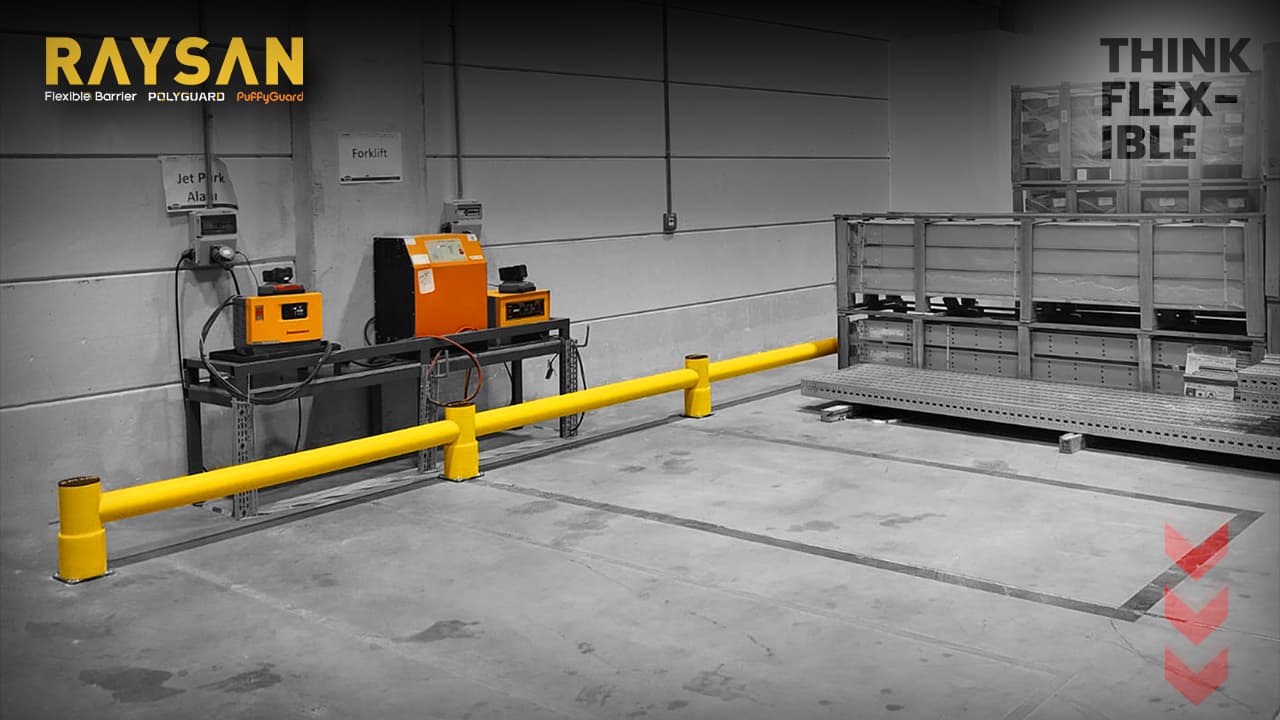
As electric forklift adoption accelerates across American warehouses and distribution centers, battery charging infrastructure is expanding rapidly. With this growth comes new safety risks that traditional steel barrier systems are poorly equipped to address.
Lithium-ion and lead-acid battery charging stations present unique hazards: thermal runaway events, acid spills, hydrogen gas accumulation, and high-traffic zones where forklifts maneuver in tight spaces around charging equipment. Barrier systems in these areas must resist chemical exposure, maintain visibility, and absorb impacts without transferring energy to charging infrastructure.
PolyCore™ barriers are chemical-resistant and non-corrosive — critical in environments where battery acid, electrolyte, and cleaning chemicals are present. Unlike painted steel, there is no risk of coating degradation contaminating the charging area or requiring frequent repainting.
For facilities planning or expanding battery charging infrastructure, NexGen recommends a site-specific barrier assessment covering traffic flow around chargers, pedestrian access routes, equipment protection zones, and compliance with OSHA and NFPA requirements for battery charging areas.
Contact our engineering team for a free site assessment of your charging station safety layout.
Questions about barrier safety?
Our engineering team can help you apply these insights to your facility.